Come and explore the APP up close
Walk along the boardwalk, observe the plants and animals, and follow the water’s journey through the park. Every stretch reveals another part of the story. Come explore!


The Permanent Preservation Area (APP) is a legally protected area that preserves springs, biodiversity, soil and the landscape, ensuring water quality, environmental balance and well-being for everyone.
The park’s APP covers more than 10,000 m² and protects springs that supply three interconnected ponds through cascades and Lago Preto, which flows into the Tietê River. The vegetation keeps the soil healthy, conserves water, and provides shade and shelter for many animal and plant species. Here, nature and education go hand in hand.
DO NOT LEAVE LITTER ALONG THE WAY.
KEEP AN EYE ON YOUR BELONGINGS WHILE WALKING ALONG THE WALKWAY.
DO NOT FEED THE ANIMALS.
NO SMOKING IN THIS AREA.
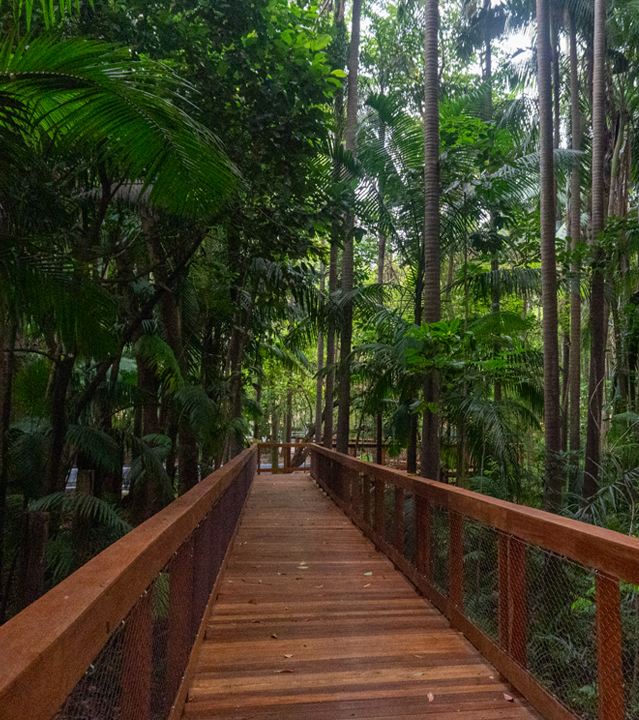
Everything here is connected. The vegetation protects the soil and springs, helps maintain water quality, and provides food, shade, and shelter for different species.
WATER: Rainwater feeds the springs and sustains life throughout this area.
SOIL: Roots hold the soil in place, prevent erosion, and help keep the water clean and healthy.
PLANTS: Native vegetation produces oxygen, provides shade and shelter, and is a source of food for many animals.
ANIMALS: They find food, protection, and a safe place to live and reproduce here.
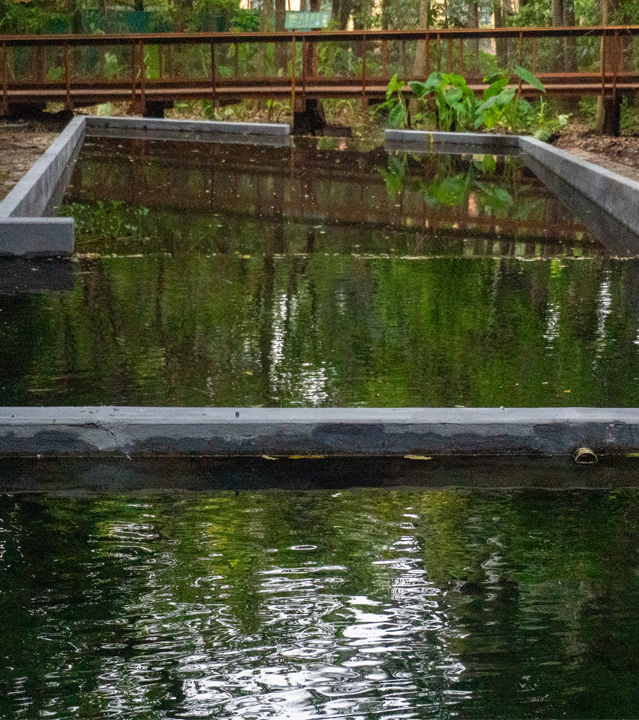
Rainwater also takes a journey we cannot see.
Some of it seeps into the soil and is stored beneath the surface.
When that water finds a natural path back to the surface, a spring forms.
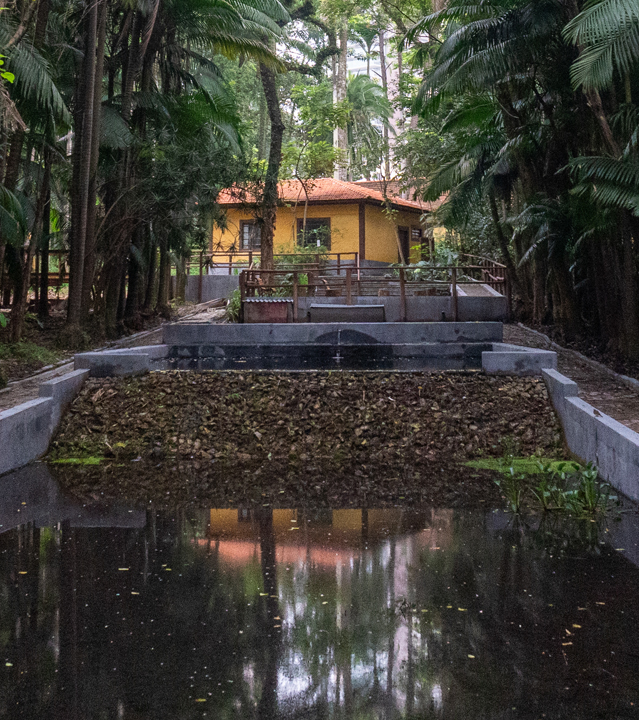
The water that springs from the ground here is part of the Sumaré Creek watershed and follows a path to the Tietê River.
1. The water emerges naturally from the ground.
2. It flows through three ponds that help trap sediment and regulate its flow.
3. The water then reaches Lago Preto, where it becomes part of the aquatic habitat.
4. Finally, the water flows through a channel toward the Tietê River.
FROM THE SPRING TO THE TIETÊ RIVER, WATER CONNECTS PLACES, LIVING THINGS, AND PEOPLE.
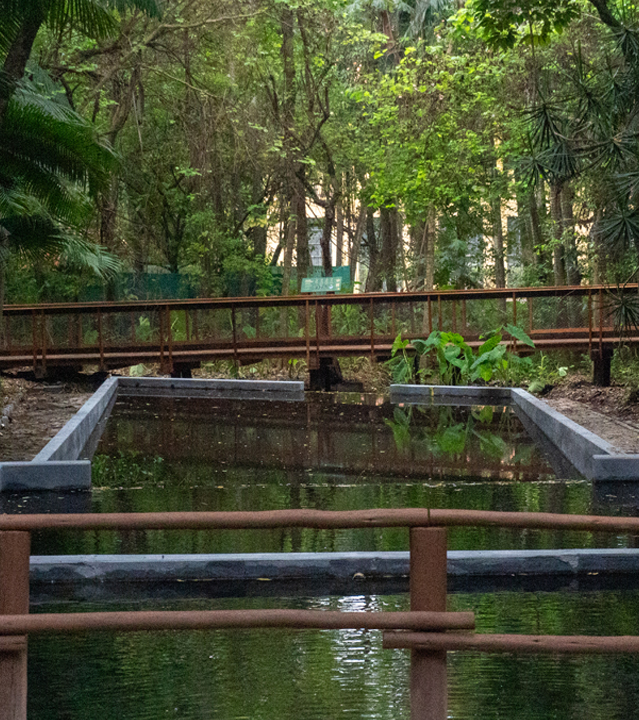
The APP is home to many animals that depend on the park for their survival.
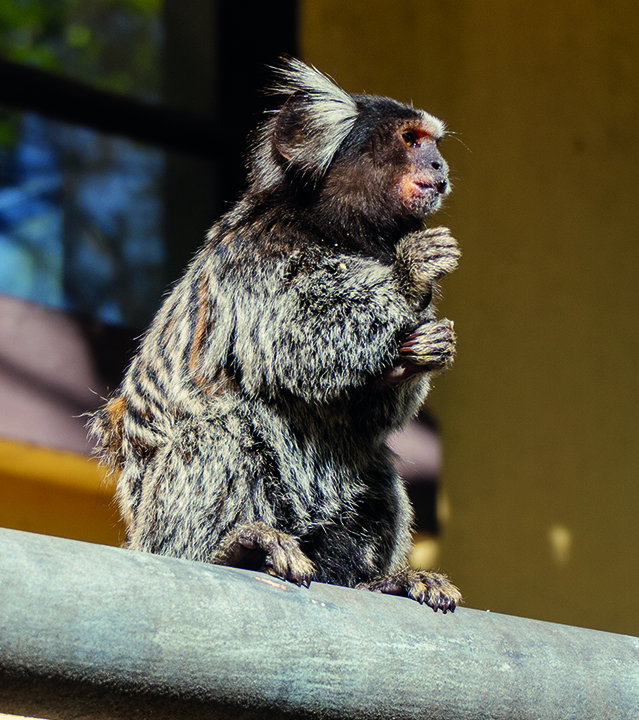
Black-tufted marmoset (Callithrix penicillata): Lives in family groups and uses its teeth to extract sap from trees.
Cane toad (Rhinella sp.): Helps control populations of insects and other small invertebrates.
Parque da Água Branca is home to many birds. They sing, fly, and play a part in the natural world around them.
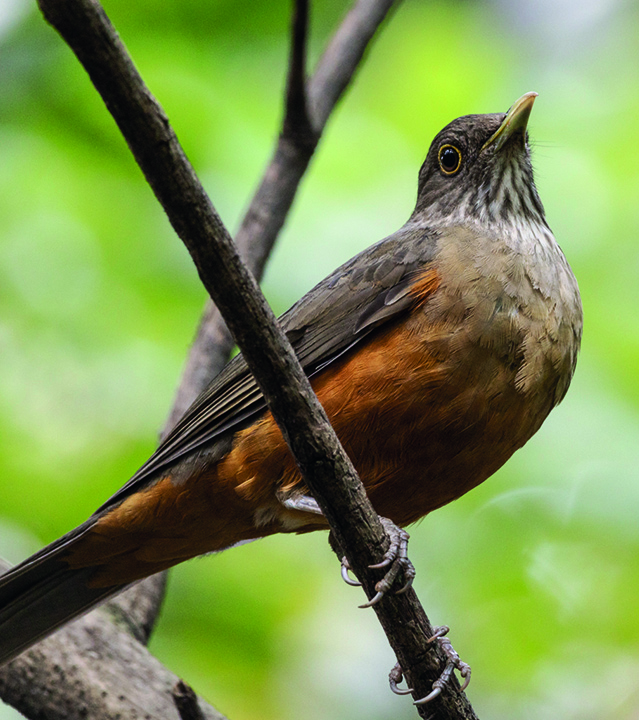
Rufous-bellied thrush (Turdus rufiventris): Known for its melodious song, it helps disperse seeds and new trees grow.
Great kiskadee (Pitangus sulphuratus): Easy to recognize by its loud call. It feeds on insects and small fruits.
Ruddy ground dove (Columbina talpacoti): Small and calm, its presence is a sign of a healthy, balanced environment.
Black-crowned night heron (Nycticorax nycticorax): Most active at dawn and dusk, it helps control populations of fish and aquatic insects.
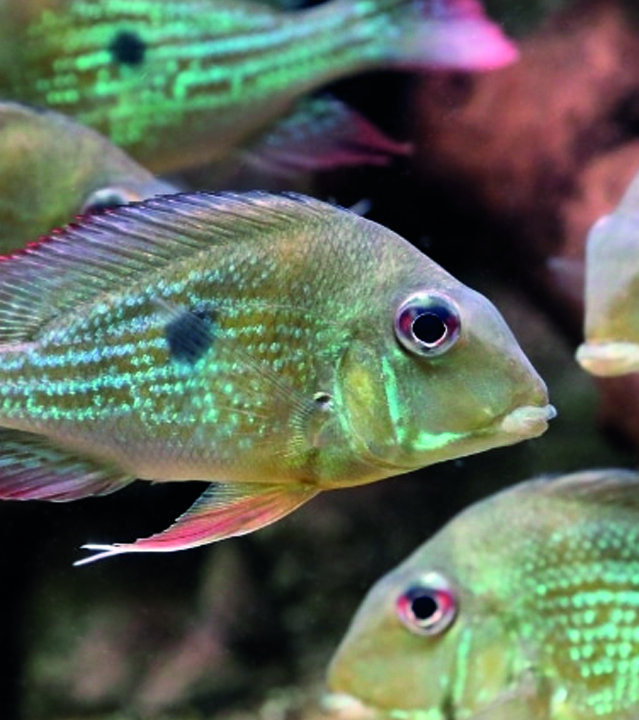
A fish that helps maintain the balance of the ecosystem lives in the ponds along the APP walkway.
It feeds on algae and small organisms, contributing to water quality while providing food for birds and other animals.
Cará (Geophagus brasiliensis):
DIET: Eats algae, small invertebrates, and organic debris.
CHARACTERISTICS: A native freshwater fish that can grow up to 18 centimeters long.
FUN FACT: Before the breeding season, the cará’s scales become darker.
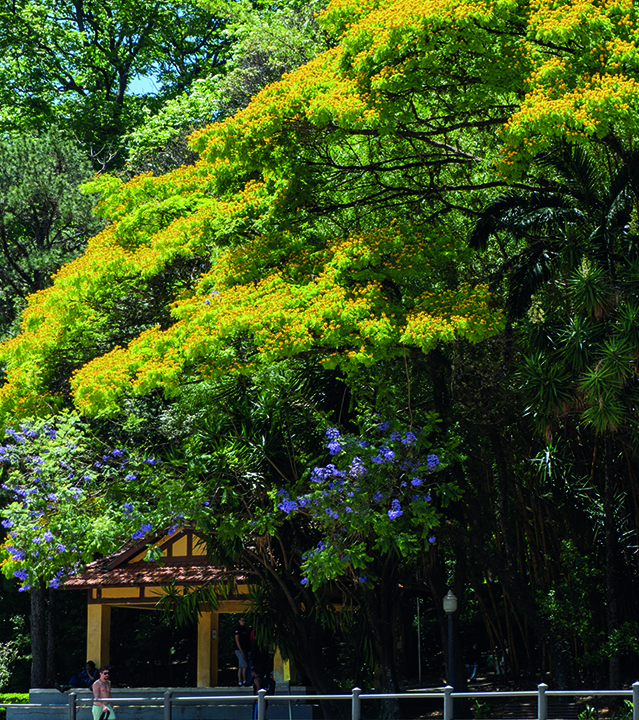
The guapuruvu is a tree native to the Atlantic Forest, known for its rapid growth and yellow flowers that stand out in the landscape. Its winged seeds are carried by the wind, helping the species spread.
CHARACTERISTICS: It can reach up to 30 meters in height.
BIOME: It is native to the Atlantic Forest. It grows in shaded environments with consistently high humidity throughout the year. It is found in southeastern Brazil and in the states of Bahia, Goiás, Paraná, and Santa Catarina.
FLOWERING: From September to December. The fruits ripen between March and May. Each fruit is a hard, flat, dry pod measuring 8.5 to 16 cm long. Each pod contains a single smooth, hard, shiny seed with a wing-like structure that helps it disperse in the wind.
FUN FACTS: It is one of the fastest-growing trees in the world and can grow up to 6 meters in a year. It is suitable for gardens, parks, industrial areas, and farms.
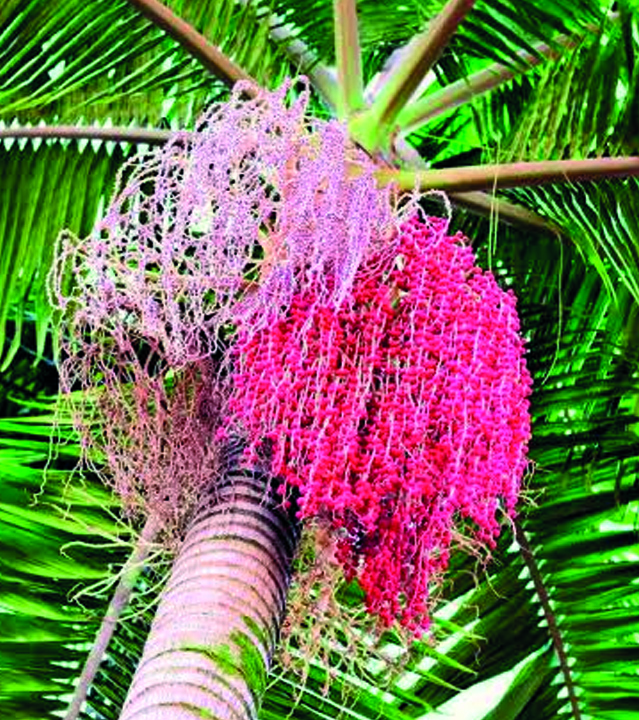
The Bangalow palm is an ornamental species native to Australia, known for its elegant trunk and clusters of red fruit. At Parque da Água Branca, it adds to the landscape and provides food for several bird species.
CHARACTERISTICS: It grows quickly and can reach up to 25 meters in height. It has a smooth, grayish trunk and dark green leaves, and produces clusters of small fruits that turn red as they ripen.
BIOME: It is native to Australia’s humid forests. In Brazil, it is an introduced species found in urban areas and remnants of the Atlantic Forest.
FLOWERING: From September to December. Its small white flowers grow in large clusters. After flowering, red fruits develop, ripening between January and May and providing food for several bird species.
FUN FACTS: Also known as the Australian palm and Australian royal palm, it is widely used in landscaping. In some places, the species is considered invasive because it can form large populations and hinder the growth of native plants.
Walk along the boardwalk, observe the plants and animals, and follow the water’s journey through the park. Every stretch reveals another part of the story. Come explore!